Gaspar Ramos: Pinto da Costa deve estar a rir-se

Fonte
rr

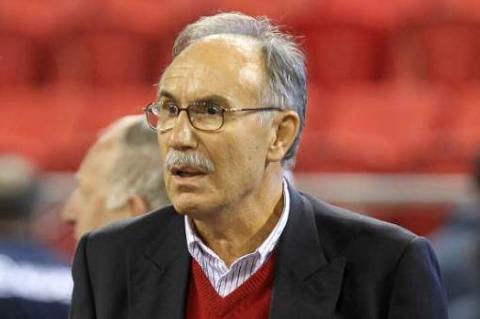
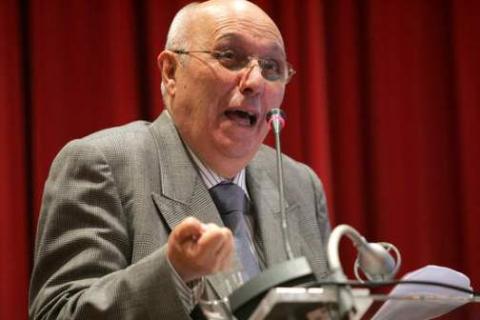
Gaspar Ramos entende que o corte de relações do Sporting com o Benfica faz com que "Pinto da Costa se esteja a rir mais uma vez".

O antigo dirigente das águias considera que esta "é uma situação desagradável e não ajuda nada à dignificação do futebol".

Em entrevista a Bola Branca, Gaspar Ramos condena, ainda, os actos dos adeptos do Benfica "que evocaram uma situação trágica na final de uma Taça de Portugal", que o próprio viveu quando era o director do futebol encarnado. O antigo dirgente entende, no entanto, que "Bruno de Carvalho deveria ter falado com Luís Filipe Vieira para esclarecer a situação e não fazer um corte de relações desta forma".

Sobre os incidentes, Gaspar Ramos considera que "a direcção do Benfica deve tomar uma atitude", sugerindo que "seja feito um inquérito e que sejam punidos os infractores".

SL Benfica vs V. Setúbal: lista de convocados

Submetida por Messi87 em
Fonte

Esta noite, pelas 19h45, o Sport Lisboa e Benfica recebe o Vitória de Setúbal, num desafio em que está em causa a passagem à Final da Taça da Liga.

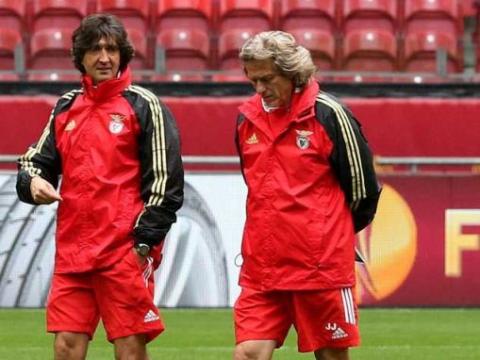
O treinador, Jorge Jesus, acaba de divulgar a lista de convocados para o encontro e a grande novidade é o ingresso de Ruben Amorim.

Convocados

Guarda-redes: Artur Moraes e Paulo Lopes;

Defesas: Jardel, Lisandro López, Eliseu, Benito e Sílvio;

Médios: Gonçalo Guedes, Rubem Amorim, Pizzi, Cristante, Salvio, Ola John, Talisca e Samaris;

Avançados: Lima, Derley e Jonas.

Benfica vs Sporting - histórico recente de cortes de relações institucionais

Fonte
cm

A decisão anunciada esta terça-feira pelo Sporting de cortar relações institucionais com o Benfica é recorrente na história centenária dos dois clubes, cuja rivalidade tem sido o mote para tensões e conflitos que têm marcado o relacionamento entre ambos. Não é preciso recuar muito tempo para encontrar um exemplo dessa relação de conflitualidade, basta reportar-nos à recente época de 2011/12, durante a qual os dois clubes entraram em rota de colisão.


'Gaiola' da Luz
O dérbi marcado para o dia 28 de novembro na Luz, da 20.ª jornada do campeonato, começou a ser jogado fora das quatro linhas antes do próprio jogo, quando o Benfica anunciou a intenção de colocar os adeptos do Sporting numa zona de segurança coberta por uma extensa rede envolvente, que ficou conhecida como 'gaiola'. A direção do Sporting apresentou um protesto veemente por tal decisão dos responsáveis do rival, alegando que a dita 'gaiola' constituía uma provocação e que só iria atiçar os ânimos dos adeptos 'leoninos' e criar um clima de tensão suscetível de gerar desacatos ou situações de violência. Em protesto, os diretores do Sporting decidiram assistir ao jogo junto dos seus adeptos, na dita zona de segurança, em vez de o fazer na tribuna, mas no final daquele encontro alguns adeptos 'leoninos' deitaram fogo às cadeiras e provocaram um incêndio que destruiu uma zona assinalável da bancada.


Sporting responsabiliza rival
Após a partida, que o Benfica venceu por 1-0, o vice-presidente do Sporting, Paulo Pereira Cristóvão, responsabilizou os dirigentes do rival pelos atos de vandalismo praticados por alguns dos adeptos 'leoninos'. "Ver um presidente de um grande clube como o Sporting a rever-se nas declarações daquele dirigente [Paulo Pereira Cristóvão], mostra que vamos caminhar muito mal no futebol. Se for assim, o Sport Lisboa e Benfica vai rever a sua relação em termos de futuro com o Sporting", afirmou então o presidente do Benfica, Luís Filipe Vieira, que acusou aquele dirigente sportinguista de "incitação à violência". A reação do Sporting não se fez esperar e surgiu através de um comunicado assinado pelo presidente Godinho Lopes: "O Sporting Clube de Portugal reitera que, face às condições encontradas, a decisão da direção de se juntar aos adeptos, e de sentir diretamente as condições que lhes eram facultadas, foi a mais acertada, e as palavras proferidas pelo vice-presidente Paulo Pereira Cristóvão expressam bem a nossa indignação." Na mesma mensagem, o presidente do Sporting, ausente do jogo por motivos de saúde, lamentou "as condições proporcionadas aos seus adeptos no Estádio da Luz", onde foram colocados "cinco pontos de acesso para a revista de todos os adeptos" com "uma vontade expressa de provocar uma entrada tardia, gerando tensões completamente evitáveis".


Relações 'normalizadas' em 2013
Curiosamente, na época seguinte, mais precisamente a 18 de abril de 2013, o sucessor de Godinho Lopes e atual presidente do Sporting, Bruno de Carvalho, que decidiu hoje cortar relações institucionais com o Benfica, veio a público anunciar que as relações institucionais entre os dois clubes se mantinham normais. "Não havia nenhum corte de relações institucionais entre Sporting e Benfica. Havia questões pessoais. Já não estão as pessoas [no Sporting], ponto final", afirmou Bruno de Carvalho, em declarações à agência Lusa, a três dias do jogo entre as duas equipas, para a 26.ª jornada da I Liga. Para Bruno de Carvalho, não havia "nenhum motivo para que não continue a existir algo que já existia, que são relações institucionais normais", tal como "não houve nenhuma mudança, nem nenhuma inflexão", apesar de o mandato do anterior presidente do Sporting, Godinho Lopes, ter ficado marcado pela tensão entre os dois clubes. "Não reatei algo que não estava decorrer. Disse sempre durante a campanha eleitoral que o que queria eram relações institucionais normais com todos os clubes, não havendo nenhuma relação de subserviência relativamente a ninguém", reafirmou, então, Bruno de Carvalho, que chegou a jantar com Luís Filipe Vieira antes do dérbi entre Benfica e Sporting.


A influência e impacto de Eusébio no futebol norte-americano

Fonte
Guardian


The team had salaries paid for by their own fans in the basement of a Toronto church, boasted one of the world’s greatest players and secured the only major championship by a Canadian football club. And the Toronto Metros-Croatia managed all this in one tumultuous season despite being a giant thorn in the side of their own league.

During their short four-year existence, the Metros-Croatia proved to be a colorful, intriguing and entertaining team, even if the North American Soccer League would have preferred the club to go away or least change its name. No North American pro football team had an ethnic name associated with it – before or since.

“How we kept our sanity through the whole season, I really don’t know,” says Aldo Principe, the general manager of the club in their 1976 championship season. “Our season has been from one extreme to the other. We got lost somewhere in the middle, but we found ourselves in time. No one gave us much of a chance.”

In 1975, the NASL was poised take a higher orbit in American professional sports. Pele signed with the New York Cosmos, an event that would open the door to some of the biggest football names on the planet – Franz Beckenbauer, Carlos Alberto, Johan Cruyff, Bobby Moore, Giorgio Chinaglia and Eusebio.

At the other end of the spectrum were the Toronto Metros, struggling to keep themselves afloat. The owners, who were deep in debt, sold the team to members of Toronto Croatia, which played in the National Soccer League of Canada. The Croatians renamed the franchise the Metros-Croatia, much to the chagrin of the league, which wanted to avoid ethnic affiliations as it went mainstream.

“It was obviously important to maintain the franchise in Toronto and this was the group that came forward to buy out the existing owners, who at that point could not continue,” says Ted Howard, who was the NASL’s director of administration at the time. “Basically, the league was in a situation where beggars couldn’t be choosers. They had a solvent ownership group that was dedicated.
Advertisement

“The biggest concern in a lot of ways, the name was a concern because it didn’t say what we wanted it to say to the public at large, that it sounded more like a club team in a city rather than a club team in an international league.”

That vision, however, would have to wait a few years.

“We knew we weren’t liked very much around the league because we had an ethnic name,” Metros-Croatia defender Damir Sutevski says. “Considering that the league was in the beginning stages, they had to take, accept the offer, of Croatia but they didn’t like it.”

The Metros-Croatia captured Soccer Bowl 1976, the NASL championship. Yet, the club’s owners and front office felt they were treated as though they were the black sheep of the league.

“We’re the underdogs no matter where we’ve been,” says George Simcic, who was the club’s general manager in 1977. “We’ve been pushed around by the rest of the league and press.

“They called us winning the championship [in 1976] something incredible. What’s so incredible? So what if we don’t have the marketing a New York, Tampa or Minnesota has. That has nothing to do with the game on the field. They have the money. We have the team.”

The Metros-Croatia used some rather unconventional methods to operate a championship team. With the club deep in debt in 1976, after one Sunday service at the Our Lady Queen of Croatia church, several members of the congregation met in the basement to take up a collection. The goal was to pay the salary of Filip Blaskovic, a superb central defender from Croatia, which at that time was part of Yugoslavia. Hundreds of Metros-Croatia shareholders belonged to the church, which was the focal point of social activities in the community.

According to one witness, “It’s like a social club. They take up a collection and you see dollars and checks all over the place. By the time they were finished, they had raised $10,000 for Blaskovic. What they [did] is common is common knowledge in Toronto. When you need financial attention, you know they’re [Croatians] there. It’s not a very professional way of running things, but it did the job.”

The church did not have problem with that set-up. “Our members directly support the team,” Father Gjuran of the church said in 1977. “The church doesn’t give directly. But I’m a soccer fan because of it.”

“The way the salaries were set up they were based on European standards,” Sutevski said. “You had a base salary and you had bonuses for each win. So the hats were passed to the fans. Basically they were collecting money for the best players and then we shared between all of the players.”

Sutevski remembered that each player received a bonus of $1,000-$1,500 a game. “Of course, as we progressed in the playoffs, the bonuses were getting higher and higher,” he added “We always remember the fact the people [gave] away from their hard-earned income to satisfy our needs and desires to win.”

The Metros-Croatia called Varsity Stadium, a 22,000-seat venue owned by the University of Toronto, home. There wasn’t a bad seat in the house. While the Metros-Croatia rarely filled the place, even a vociferous crowd of 6,000 could sound more like 16,000, given its extreme passion. The team, however, averaged only 5,555 a game in 1976, 15th out of a 20-team league that averaged 10,295 a match.

One Toronto sportswriter, who asked for anonymity, received a first-hand message how seriously those fans took the sport. “I reported the game perfectly straight, but I had to report that Croatia lost,” he said. “Two nights later I arrived home to find on my front step a big, furry bat, nailed to a board with a spike driven through its heart. It was a criticism from the [fans].”

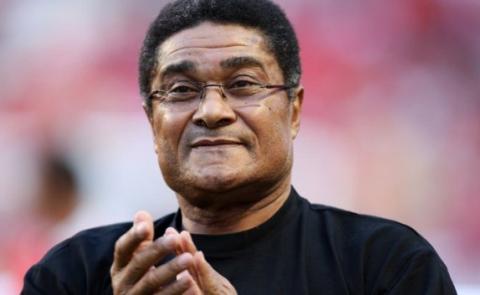
The team had nine players of Croatian and Yugoslavian descent, with players from nine other nations represented, including Greece, Poland, Northern Ireland, Germany, Suriname, Hungary and Canada. And then there was Portuguese great Eusebio. The Ballon d’Or winner, who would go on to be voted of the 10 best footballers of the 20th century, was in the twilight of his legendary career but still a dangerous player.

“Needless to say, he was one of the greatest players in the world,” Sutevski said. “Even though he had a bad knee, he put everything he had in the game.”

Indeed. Eusebio, whose knee was constantly worked on by team trainer Pat Quinn, demonstrated he could produce some magic, scoring 16 goals in 21 matches and creating four others.

“A lot of [opposing] players were afraid of him because they knew his history,” Sutevski said. “His free kicks, his ball distribution, were awesome.”

Similar superlatives also could be bestowed on Brazilian midfielder Ivair Ferreira, nicknamed “The Prince,” according to Sutevski, and German midfielder Wolfgang Suhnholz, a mid-season acquisition who became the midfield general.

After enduring a mid-season swoon in which the team failed to score in seven consecutive games, Toronto’s intense and demanding coach Ivan “The Terrible” Markovic got into a confrontation with Eusebio. A major change was on the horizon.

Markovic benched Eusebio for a home game against Pele and the New York Cosmos on 7 July. Word had it that the Black Panther was sick or was trying to recover from a leg injury as he missed a 3-0 defeat. “Sick? Eusebio asked in disbelief, according to the Toronto Star. “I’m healthy. This has never happened to me in my life. I can’t believe it. ... There is a lot of politics involved.”

One club official said that Eusebio, who was considered a disruptive force, would be placed on waivers, the prelude to a player getting released. Everything was turned upside four days later. After a 2-1 home win over the Portland Timbers, in which Eusebio broke a team scoreless streak of 775 minutes and nine seconds (the NASL measured time in minutes and seconds, rather than hours), Markovic was fired.

Marijan Bilic, who directed the team to a 13-9 mark in 1975, was reinstated as coach and he brought in Domagoj Katepanovic as his tactician. It was a bumpy ride at first as the team lost three successive matches before reeling off four straight wins to finish with a 15-9 record, second in the Northern Division and tied for the sixth best overall mark.

On the eve of their playoff opener against their arch-rivals, the Rochester Lancers on 18 August, the team found themselves without their starting goalkeeper as Paulo Cimpiel staged a one-man strike, demanding more money. The club promoted Zeljko Bilecki, who had played only three times during the regular-season.

Bilecki, who made several vital saves, wasn’t even the hero. Defensive midfielder Gene Strenicer, who had not scored during the regular season, tallied a controversial goal with only second remaining in regulation for a 2-1 win (there was no stoppage time in those days). “God helped us tonight,” Bilic told reporters. “We needed somebody’s help tonight.”

Two days later, Ferreira, struck twice in 3-2 shootout win over the host Chicago Sting, 3-2. The Metros-Croatia then dispatched the defending champion Tampa Bay Rowdies, 2-0, in the semi-finals as Eusebio and Ted Polak found the back of the net. “We didn’t think we were going to make it past Tampa,” Sutevski says. “That was a weird surprise.”

That set up an 28 August Soccer Bowl confrontation with the Western Division champions Minnesota Kicks, who were considered favorites on the strength of their youth, speed and dynamic attack (54 goals in 24 matches). They had won 10 of their last 11 matches.

CBS TV announcers were given directives by the league not to use the nicknames of the teams, only their city names, to keep away from the ethnically-based Croatia.

But that was no way the Metros-Croatia could be stopped on the field though, as they rolled to a 3-0 triumph in Seattle’s Kingdome. Eusebio scored via a 40th-minute free kick. Ivan Lukacevic and Ferreira added two more in the second half. Suhnholz was named the game’s outstanding player.

Sutevski attributes the team’s success to their “experience and knowledge of the game. ... Everyone tried very hard. The team didn’t get hurt. They called us a Cinderella team because no one gave us a chance to win the whole thing.”

The problems with the league continued though. The NASL, in the first paragraph of its report on the Soccer Bowl, called the team the Toronto Metros, leaving out Croatia. On top of that no Metros-Croatia was selected as first- or second-team all-stars, though Suhnholz and Cimpiel received honorable mentions.

Simcic felt the league’s failure to recognize the club as the Metros-Croatia cost them $200,000 in potential investments from the Croatian community, a decent sum of money in those days. “I personally feel it’s an injustice made on the owners of the team,” he says. “They approved the name … so why not keep it? There wouldn’t be a franchise in Toronto if it wasn’t for the Croatian community.”

The team lasted another two years before Prosoccer Limited purchased it prior to the 1979 season, ending the ethnic affiliation. It was renamed the Toronto Blizzard and moved to the larger CNE Stadium. “We wanted a name which could be identified with Canada,” the team president, Bruce Morton, said. “A name which could meet the perception of Canada held by most North Americans and Europeans.” The Blizzard advanced to Soccer Bowl in 1983 and 1984, but never quite reached their predecessors’ heights.

Toronto FC have since taken up the mantle. In contrast to the Metros-Croatia’s success, FC have struggled and have never reached the playoffs since joining Major League Soccer in 2007. That is a rather dubious distinction considering almost half the teams reach the postseason every year.

As for the likelihood of a team return with an ethnic name returning to North American professional football, the chances are slim if not impossible. “I don’t foresee that happening because the [new] league is a lot stronger now,” Sutevski says. ‘I don’t think the league itself would let it happen.”

Although if MLS did, it could lead to some intriguing adventures, not unlike the Toronto Metros-Croatia themselves.
 

Manuel Sérgio disponível para mediar conflito Benfica vs Sporting

Fonte
rr
O Provedor da Ética no Desporto, Manuel Sérgio, mostra-se "disponível" para promover o diálogo entre Sporting e Benfica, na sequência do anúncio de corte de relações institucionais decretado, unilateralmente, pelos leões. O professor catedrático confessa, por princípio, que este tipo de medidas em nada "ajudam" à salutar convivência entre todos os agentes desportivos. No entanto, Manuel Sérgio assegura que, caso seja chamado a intervir como uma espécie de mediador no conflito, não irá rejeitar essa responsabilidade. "Os cortes de relações não ajudam. Não é maneira de estar no desporto. Agora, não conheço quais são as razões em que o Sporting se fundamenta para tomar a atitude que tomou. Julgo que a Direcção do Sporting deveria falar com a Direcção do Benfica e a do Benfica com a do Sporting. Disponível para ajudar a solucionar o conflito? Estou sempre disponível para tudo. Claro está que quero lutar por um desporto fraterno", afirma, num curto contacto telefónico com Bola Branca. Manuel Sérgio chegou a colaborar com o Benfica, na estrita dependência da equipa técnica do plantel principal de futebol, orientado por Jorge Jesus. Recorde-se que o Sporting anunciou, esta terça-feira, o "corte de relações institucionais" com o Benfica, na sequência dos incidentes registados no passado fim-de-semana, durante os "derbies" entre os dois clubes, no domínio do futebol e do futsal.


Djuricic - entrevista - "Benfica foi o momento mais difícil da carreira"

Fonte
rr

Filip Djuricic confessa que a primeira época ao serviço do Benfica assumiu-se como "o momento mais díficil" da sua carreira, até agora, admitindo, de forma indirecta, alguma culpa no falhanço do objectivo de se afirmar na Luz.

 Contratado ao Heerenveen em 2013, por seis milhões de euros, o internacional sérvio não entrou nas opções regulares de Jorge Jesus. Esta temporada, começou por ser cedido aos alemães do Mainz, mas foi agora emprestado ao Southampton, clube no qual realizou o primeiro treino, esta terça-feira. "Foi o momento mais difícil da minha carreira. Vim do Herenveen, um clube pequeno na Holanda, para o Benfica, um dos maiores clubes da Europa. Havia uma grande expectativa. Comecei bem, mas depois as coisas não foram no sentido que eu gostava e por isso acho que esta é uma boa oportunidade para voltar ao caminho certo", afirmou Djuricic, em entrevista ao site oficial dos "saints". Mostrando-se focado em "ajudar" a equipa onde milita o português José Fonte, o sérvio reconhece que o facto de o treinador Ronald Koeman o conhecer do futebol holandês ajudou a este "resgate" para a Premier League. "Ele [Ronald Koeman] conhece-me da Liga holandesa, já joguei contra ele algumas vezes. Sei como jogam as equipas dele. Essa foi a principal razão. Fiquei impressionado com a forma como jogava a equipa dele. Se, naquela altura, me perguntassem se queria ir para Ajax, PSV ou Feyenoord, escolhia o Feyenoord por causa dele", sustentou.

Daúto Faquirá: "Jardel é um verdadeiro guerreiro"

Fonte
ojogo

Daúto Faquirá lançou Jardel na I Liga, ao serviço do Olhanense, e a afirmação do central no Benfica esta temporada não o surpreende. "Esteve sempre muito tapado, primeiro por David Luiz e depois por Garay. Nesta época tem conseguido afirmar-se ao lado de Luisão, numa altura que coincide com a sangria de jogadores importantes no Benfica, o que também o deixa mais exposto enquanto central, até por uma certa indefinição inicial quanto à posição 6. E, por vezes, Jardel não se soube proteger, jogando mais simples nalgumas das oportunidades que teve, e acabou por ser crucificado por certas falhas, nomeadamente as tidas frente ao Zenit. Acredito que este jogo com o Sporting possa marcar uma mudança e uma afirmação em definitivo. Jardel tem condições para jogar ao mais alto nível e, em Alvalade, já esteve próximo do melhor que pode fazer", declarou o treinador a O JOGO.

"Jardel é um jogador que dá tudo pela sua equipa, que vai até aos limites da dor, sendo um verdadeiro guerreiro e com um raro espírito de sacrifício, apenas igualado pela sua humildade. Recordo-me, por exemplo, de que já após ter acordo para ir do Olhanense para o Benfica, teve a hipótese de não jogar frente ao V. Guimarães. Apesar disso, Jardel insistiu em ser convocado, jogar e ajudar-nos, agradecendo aos colegas o que fizeram por ele em Olhão", acrescentou Faquirá, adivinhando uma longa carreira de Jardel no Benfica.

"Luisão é um jogador com características de liderança que não são vulgares, mas acredito que Jardel pode vir a jogar muitos anos no Benfica e, se continuar ao lado de Luisão, aprofundar mais o espírito de liderança. Jardel é discreto, gosta de passar despercebido e transporta isso para o campo, mas Garay também tinha um perfil similar e era o esteio da defesa do Benfica, ajudando muito Luisão nas dobras, e ainda o lateral-esquerdo. Luisão, aliás, tem um processo de jogo parecido e os grandes centrais são mesmo assim. Quanto a sair do Benfica, depende mais de se afirmar como titular", rematou.

Manuel Oliveira nomeado para o Benfica-Vitória de Setúbal

Fonte
rr
O Conselho de Arbitragem (CA) da Federação Portuguesa de Futebol (FPF) divulgou, esta terça-feira, o quadro de nomeações para a jornada 21 da Primeira Liga. O portuense Manuel Oliveira estará na Luz, domingo, para o jogo que opõe o campeão e líder da tabela, Benfica, ao Vitória de Setúbal. O desafio arranca às 17h00. A ronda arranca na sexta-feira, com a recepção do FC Porto ao Vitória de Guimarães. O algarvio Nuno Almeida foi o escolhido para a partida do Dragão (20h30). No sábado, o Sporting joga no Restelo, diante do Belenenses. Paulo Baptista (AF Portalegre) é o árbitro designado para o "derby" lisboeta.  Primeira LigaNomeações da Jornada 21 Sexta-feira, 13 de Fevereiro de 201520h30FC Porto – Vitória de Guimarães, Nuno Almeida (AF Algarve)Sábado, 14 de Fevereiro de 201518h00Gil Vicente - Paços de Ferreira, João Capela (AF Lisboa)20h15Belenenses - Sporting, Paulo Baptista (AF Portalegre)Domingo, 15 de Fevereiro de 201516h00Penafiel - Marítimo, Manuel Mota (AF Braga)Rio Ave - Moreirense, Bruno Paixão (AF Setúbal)17h00Académica - Boavista, Luís Ferreira (AF Braga)Benfica – Vitória de Setúbal, Manuel Oliveira (AF Porto)19h15Sporting de Braga - Arouca, Tiago Martins (AF Lisboa)Segunda-feira, 16 de Fevereiro de 201520h00Nacional - Estoril, Cosme Machado (AF Braga)